
County News
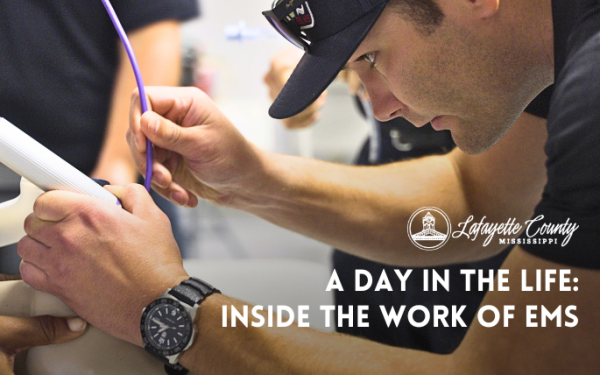
“There’s really no such thing as a typical EMS call,” says Lafayette County Assistant Chief of EMS Toby Lafayette.
In Lafayette County, EMS crews are dispatched to everything from chest pain and shortness of breath to car wrecks and cardiac arrests. Responders rarely know exactly what they’ll find on scene. Often information is sparse, and there’s pressure to quickly understand what’s happening and what to do next.
Toby describes it as working through a puzzle, piecing together symptoms, test results, and bystander information until a clear picture begins to emerge.
In Lafayette County, EMS is part of the Fire Department. That doesn’t mean every firefighter is a medic. Instead, the department includes EMTs and paramedics who respond alongside firefighters on the same trucks.
The result is faster and broader coverage than can be found in many rural communities, where calls may bring fewer responders and fewer tools to the scene.
When Minutes Matter
When Lafayette County EMS crews arrive on scene, their role depends on who gets there first.
“If the ambulance is already there, we come in and support them,” Toby says. “But most of the time, we actually arrive before the ambulance. In that case, we bring the monitor, the airway kit, and start patient care right away.”
That care can range from basic assessments to advanced procedures like CPR, medications, and airway management. “We carry everything an ambulance has except a stretcher and narcotics,” Toby says. “If we have a paramedic on the truck, we can do everything they can before they even get there.”
Because fire stations are spread across the county, crews are often closer to emergencies than the ambulance service. In critical situations like cardiac arrest, that means advanced life support can begin minutes sooner.
Tools That Save Lives
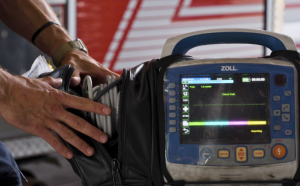 When EMS crews arrive, they bring more than people. The trucks are equipped with advanced tools designed to keep critical patients alive.
One of the most important is the LUCAS device, which delivers automated CPR. “The LUCAS device has really changed the way we treat cardiac arrest,” says Division Chief and Paramedic Jamie Roy. “It keeps the quality of CPR steady. It absolutely saves lives.”
Crews also rely on ZOLL cardiac monitors, which can perform EKGs, monitor vital signs, and guide treatment decisions. With five ZOLL monitors in service across the county, responders can track a patient’s condition in real time and intervene more effectively.
Toby credits county leaders for access to this kind of equipment, which is rare in most of the state. For residents, it means that when a fire truck pulls up, the care inside is backed by hospital-grade technology.
Training That Matters
Behind every call is ongoing training. The people who step off the truck are trained, retrained, and held to a high standard.
“We’re always trying to improve,” Toby says. “It’s not just the advanced things. It’s the little things too.”
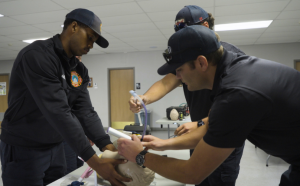 Crews regularly review patient assessment fundamentals while also training on advanced topics like pediatric care and airway management. They attend national conferences, bring new techniques back to Lafayette County, and apply them in the field.
Jamie says that education never stops. “We get a lot of continuing education opportunities. Toby does a really good job of making sure we’re prepared.”
The reason is simple. When the call comes, patients don’t get a second chance.
Finding the Right Path Forward
For EMS crews, information doesn’t always come in a neat package. A caller may only know that someone has collapsed, or that a loved one “isn’t acting right.” When responders arrive, it’s up to them to sort through symptoms, test results, and bystander accounts to understand what’s happening.
Toby teaches his crews to approach these calls by systematically narrowing the possibilities. “If I’m going to an altered mental status call, I put everything that could be causing it in a bucket in my mind,” he explains. “As I ask questions and run tests, I start pulling things out. If the blood sugar is normal, diabetes comes out. If the stroke assessment is normal, stroke comes out. By the time we get to the hospital, I want just a couple of things left in that bucket.”
The point isn’t to diagnose—that’s the hospital’s job—but to narrow the possibilities quickly enough to provide the right care in the field. Every piece of information sorted under pressure can change what happens next, whether that means calling in a helicopter, starting advanced medications, or preparing for cardiac arrest.
“It’s not about guessing,” Toby says. “It’s about doing everything you can in those first minutes to make sure the patient has the best chance once they get to the hospital.”
Strength in Numbers
In many rural counties, a serious emergency might be handled by a single paramedic. In Lafayette County, it can look very different.
“It would not be difficult to put six paramedics on a major scene right now,” says Captain and Paramedic John Michael Hill.
That depth matters. Emergencies rarely unfold one step at a time. Multiple trained providers allow lifesaving tasks to happen simultaneously, from CPR and airway management to medications and family support.
The department relies on both paramedics and EMTs. Paramedics handle advanced procedures, while EMTs provide essential patient care and stabilization. Together, they form a system that is unusually strong for a rural community, with 21 paramedics and 40 EMTs serving the county.
A Community That Responds
Emergency care works best when the community plays a part in it. Lafayette County’s EMS teams emphasize that residents can make a difference long before responders arrive.
One way is through CPR. Crews regularly teach classes at schools, churches, daycares, and scout meetings, with a goal of training about 1,000 people each year. “We’re trying to get as many people trained as we can,” Jamie Roy says. “If bystanders start CPR before we get there, that patient’s chances of survival go way up.”
Simple steps at home also matter. Making sure addresses are clearly visible from the road helps crews find the right location quickly. Giving dispatchers as many details as possible—whether a patient is bleeding, trapped, or struggling to breathe—helps responders prepare before they even step off the truck.
As Toby explains it, it comes down to a simple idea: help us help you.
Prepared for the Next Call
No one on shift ever knows what the next call will bring. It might be a wreck on the highway, chest pain in a living room, or a child who suddenly can’t breathe. When crews roll out, they bring what they can control: training, equipment, and a team that knows how to work fast and steady in the first minutes.
“It’s not always about saving a life,” Roy says. “Sometimes it’s about making a life better.”